From family legacy to shared history
The Historical Archive of the Museo della Shoah Foundation collects and preserves family archives to restore identity to the victims and pass on the knowledge to the new generations
For over ten years, the Historical Archive of the Museo della Shoah Foundation has collected and preserved family archives that tell the stories of the shattered lives of victims of the anti-Jewish persecution in Italian territories. Administrative documents, photographs, handwritten diaries, notes from prisons, letters from the Fossoli transit camp for Jews, and other such materials, make it possible to reconstruct the lives of those who first endured the period of the “persecution of rights” between September 1938 and 25 July 25 1943, and later that of the “persecution of lives,” during the Nazi occupation
In the face of the natural erosion of memory, Holocaust denial, and the improper overlap of historical events, there is a growing urgency to anchor the narrative of the Shoah to the solidity of historical sources. With the gradual passing of the direct witnesses to the extermination camps, the archive is destined to become the core around which education on these topics will develop in the coming years.
It is thanks to the study and analysis of family archives that the people reduced to numbers on the transport lists and destined to the Nazi extermination camps can regain a name, a story, an identity, and once again be called dad, mom, son, etc.
From this awareness stems the document collection campaign of the Historical Archive of the Museo della Shoah Foundation,
titled “From Homes to History.” Every document can bring someone back to life.
Part of this initiative is the “Archivio Racconta” portal, a digital platform that currently contains eight biographies compiled from family archives donated to the Foundation over the past ten years.
Among the main objectives we had in mind when publishing this portal online, two stand out in particular:
a. inform future donors about the daily commitment with which the Historical Archive of the Museo della Shoah Foundation turns documents into stories accompanied by photo and documentary galleries, timelines, transcriptions, interactive maps, and much more. cronologie, trascrizioni, mappe interattive e molto altro.
b. introduce students to the study of the Holocaust by analyzing archival sources that recount the various phases of the anti-Jewish persecution in Italian territories, promoting a critical and informed approach to the past.
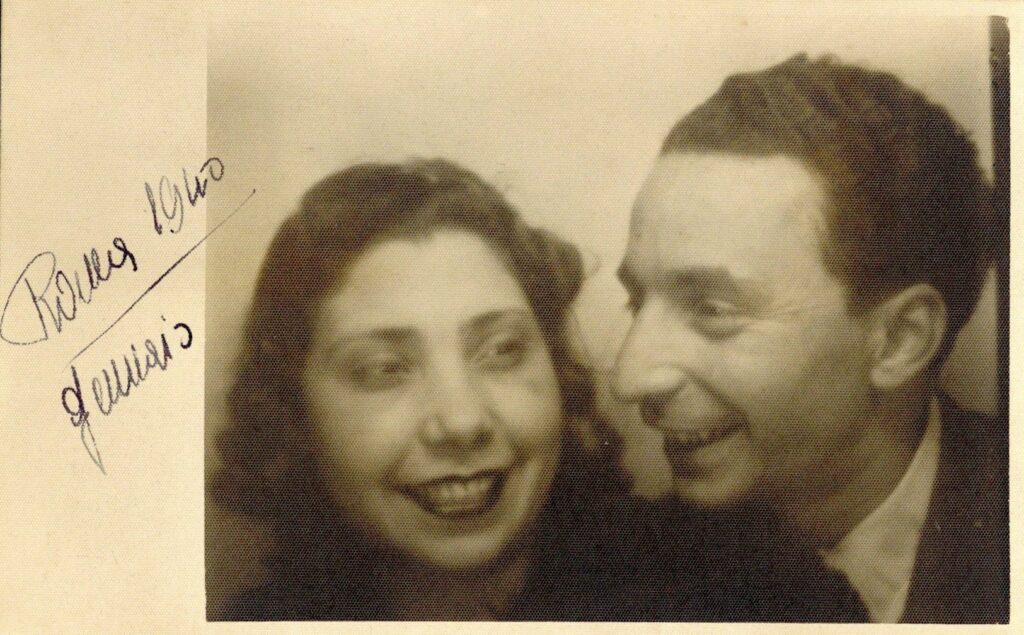
Our purpose is to connect the memories of the donors in our archive – some of whom were direct witnesses to the anti-Jewish persecution – with students, researchers, and members of the public eager to explore these topics in greater depth. Our goal is for the documents we preserve to act as a bridge across generations and as a tool for knowledge and awareness, so that the memory of the past is not lost but continues to challenge the present